
28 September 2026 —
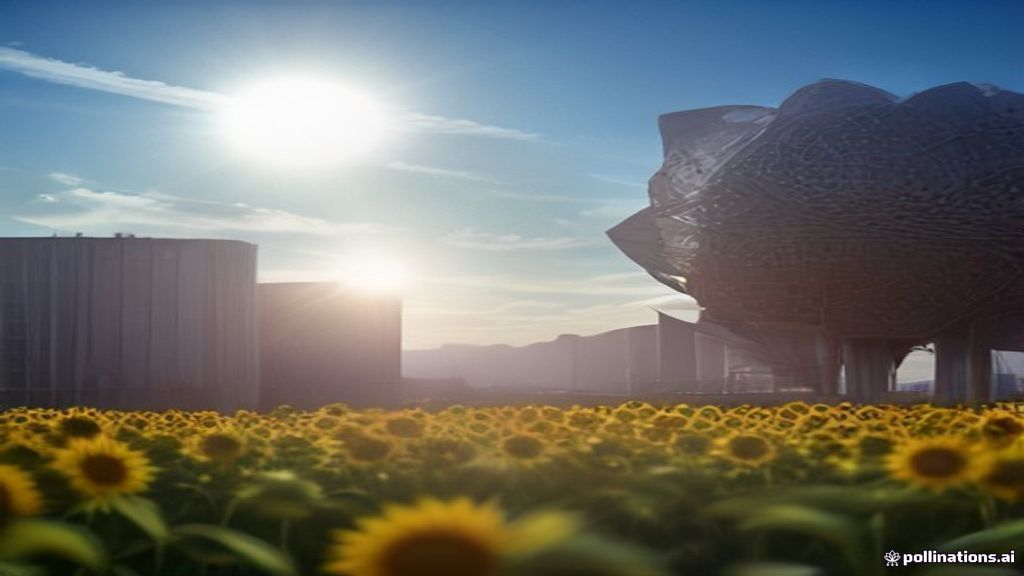
Researchers have engineered a novel sunflower-inspired cooling system capable of delivering up to 135 percent more cooling power at peak solar noon compared to traditional fixed horizontal surfaces. Drawing inspiration from natural heliotropism—the process by which young sunflowers reorient their blossoms toward the sun—the breakthrough design dynamically optimizes its angle to manage thermal energy far more effectively during the hottest periods of the day.
Overheating poses a persistent challenge across modern technologies, including photovoltaic solar panels, high-performance electronics, and building climate control infrastructure. Standard stationary thermal management systems frequently suffer performance losses when ambient solar radiation reaches its daily maximum. To solve this limitation, scientists studied the flexible structural movements of plants to design an adaptive surface that responds continuously to changing light and temperature conditions.
The newly developed system incorporates smart materials that adjust mechanically without requiring complex, power-hungry motorized tracking gear. By maintaining an optimal angle relative to the sun, the biomimetic device enhances heat dissipation while preventing excessive localized thermal buildup. Rigorous testing confirmed that at peak daylight, the flexible arrangement outperformed static horizontal setups by a wide margin, proving the viability of bio-inspired kinetic cooling.
Potential applications for the sunflower-inspired mechanism extend across several renewable energy and industrial sectors. Implementing self-adjusting thermal arrays in solar power farms could significantly reduce heat-induced efficiency losses, allowing panels to produce more electricity during peak summer hours. Additionally, integrating biomimetic cooling panels into commercial building facades could lower indoor temperatures naturally, reducing dependence on energy-intensive air conditioning units.
As global temperatures rise and energy demand continues to soar, engineers are increasingly turning to nature to develop passive, sustainable technological solutions. Researchers plan to conduct further tests to refine the durability of these flexible materials and evaluate their long-term cost-effectiveness for mass manufacturing and widespread industrial deployment.
Useful links
Tourism & Management · Citizen Responsibility · Skill Services · Ramesh Poudel
Published with WpNewblog — www.rameshpoudel.com
About the Author