28 September 2026 —
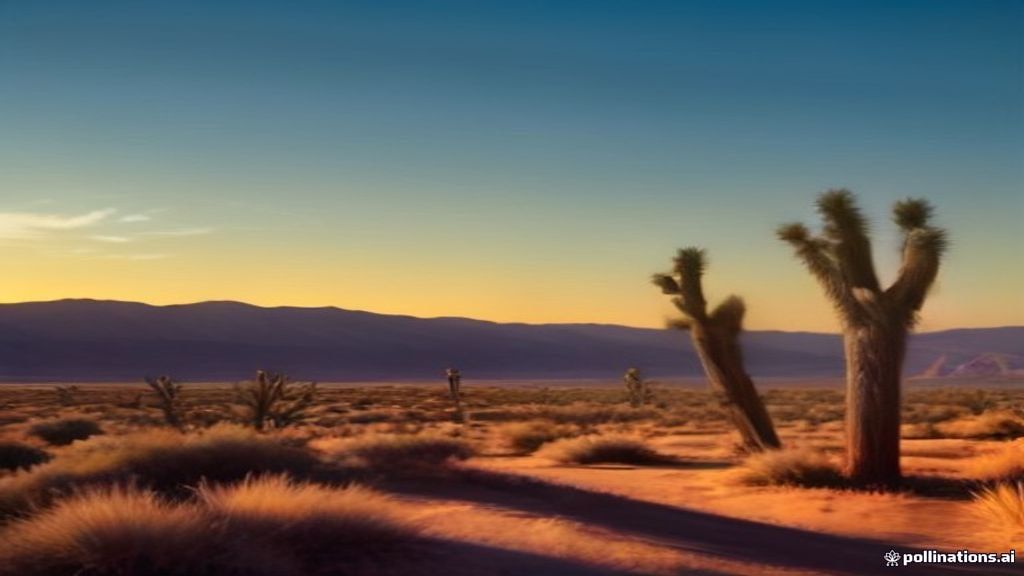
State officials in California have finalized the acquisition of 640 acres of high desert land near Pioneertown, securing a vital refuge dedicated to western Joshua tree conservation. The strategic land purchase was executed by the California Department of Fish and Wildlife to protect the ecologically sensitive species from the growing pressures of habitat loss and climate change.
Funding for the 640-acre acquisition was drawn from the Western Joshua Tree Conservation Fund, a state mechanism established to preserve critical desert ecosystems. Scientific studies identified the Pioneertown location as one of Southern California’s most resilient future habitats, with climate projections suggesting that the elevated terrain offers microclimatic conditions capable of buffering the trees against rising global temperatures and prolonged droughts.
The western Joshua tree serves as a keystone species within desert ecosystems, providing critical shelter and nourishment for diverse wildlife. However, severe environmental pressures, invasive species, and increasing desert wildfires have threatened its natural regeneration. Environmental biologists consider securing high-altitude lands essential for creating genetic sanctuaries where the species can endure changing atmospheric conditions.
A central feature of the new initiative involves direct collaboration with regional Native American tribes. State wildlife authorities plan to enter into co-management agreements, integrating traditional ecological knowledge into ongoing land stewardship. Indigenous leaders will help guide restoration strategies, biodiversity monitoring, and cultural resource protection across the newly acquired preserve.
The establishment of this preserve marks an important milestone under California legislation designed to balance environmental preservation with regional development. Under this framework, mitigation fees paid by energy and construction projects impacting trees elsewhere are channeled directly into purchasing high-value, contiguous land parcels for permanent protection.
Looking ahead, state conservation leaders aim to use the Pioneertown property as a benchmark for future land acquisition projects. By combining scientific climate modeling with tribal co-management, wildlife officials hope to build a durable network of protected desert corridors across Southern California.
Useful links
Tourism & Management · Citizen Responsibility · Skill Services · Ramesh Poudel
Published with WpNewblog — www.rameshpoudel.com
About the Author