
21 September 2026 —
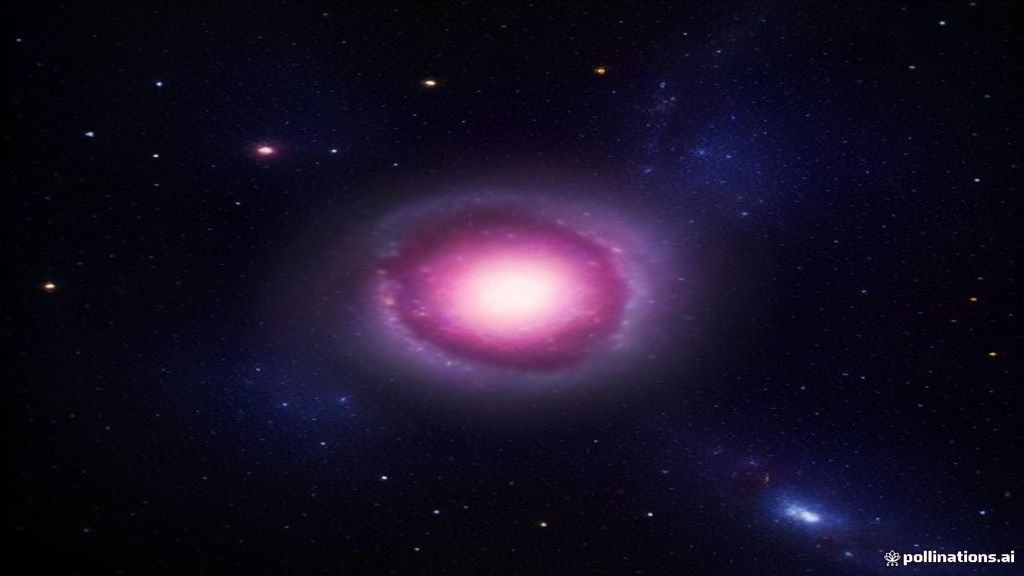
NASA’s James Webb Space Telescope, working alongside the Hubble Space Telescope, has captured detailed new imagery of the iconic Black Eye galaxy, providing fresh insights into its violent past and complex structure. Located roughly 17 million light-years from Earth in the constellation Coma Berenices, the celestial body—cataloged as Messier 64 or M64—is celebrated for the prominent, dark band of light-absorbing dust sweeping across its bright central core.
The primary highlight of the updated observations is the galaxy’s extraordinary internal motion. Astronomers have long known that Messier 64 exhibits a rare counter-rotating system, where gas residing in the outer regions rotates in the opposite direction compared to the stars and gas closer to the center. This counter-rotation generates tremendous friction along the colliding borders of the two gas systems, driving energetic bursts of new star birth throughout the sweeping dark lanes.
According to astrophysicists at NASA, this unusual physical dynamic serves as a compelling cosmic footprint of an ancient merger. Scientists believe that the Black Eye galaxy collided with and fully swallowed a smaller satellite galaxy over a billion years ago. While the stars of the smaller galaxy merged into the main structure, its interstellar gas retained its original direction of rotation, creating the dual-motion phenomenon seen today.
The joint observations leverage the complementary strengths of both space observatories. Hubble provides crisp optical data showing the brilliant arrangement of older stars and outer dust lanes, while the Webb telescope utilizes its advanced infrared instruments to pierce through obscuring clouds of cosmic dust. This infrared vision allows scientists to map warm dust distributions and pinpoint precise sites of active star formation that were previously hidden from view.
Studying objects like Messier 64 helps astronomers better understand how galactic collisions shape the cosmos. Galactic mergers are considered fundamental events in galaxy evolution, redistributing matter and sparking widespread stellar growth across billions of years. The new imagery of the Black Eye galaxy underscores the ongoing power of space telescopes to unravel complex cosmic histories.
Useful links
Tourism & Management · Citizen Responsibility · Skill Services · Ramesh Poudel
Published with WpNewblog — www.rameshpoudel.com
About the Author