
19 September 2026 —
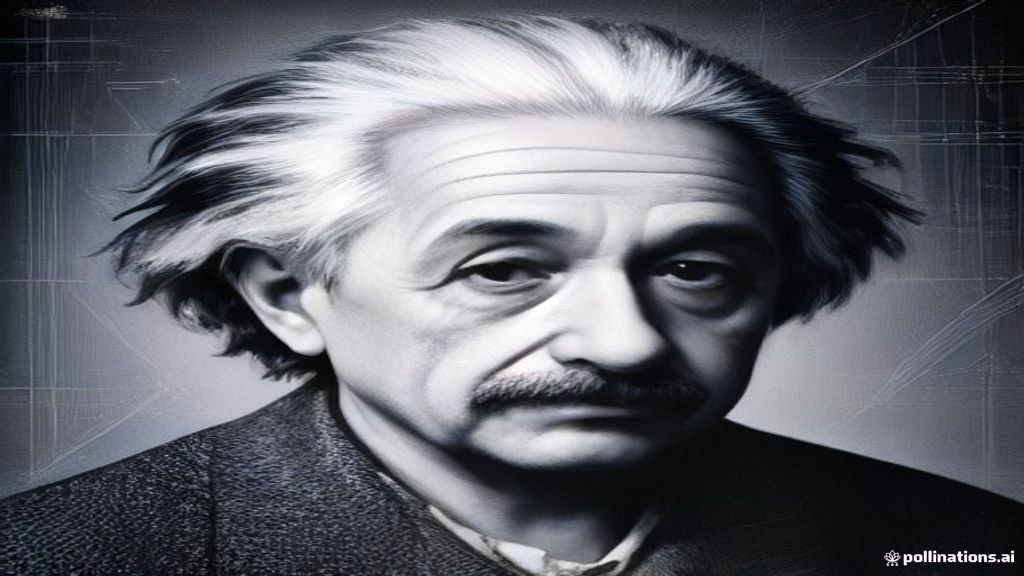
A timeless principle attributed to theoretical physicist Albert Einstein continues to guide modern scientific thought, engineering, and philosophical inquiry: the insight that explanations should be made as simple as possible, but no simpler. Broadly celebrated as an intellectual benchmark, this famous Albert Einstein simplicity quote emphasizes the delicate balance between necessary brevity and empirical accuracy in complex problem-solving.
While the popular phrasing evolved through various transcriptions and retellings over the decades, the core concept stems from Einstein’s 1933 Herbert Spencer Lecture delivered at Oxford University. In his address, titled “On the Method of Theoretical Physics,” Einstein argued that the supreme goal of theoretical physics is to make foundational assumptions as simple and as few as possible, without abandoning the accurate representation of physical reality.
This philosophical stance proved instrumental in Einstein’s own ground-breaking contributions to physics, including his development of the general theory of relativity. By discarding unnecessary theoretical baggage while refusing to ignore anomalous experimental data, he demonstrated that scientific progress requires both elegance and uncompromising exactness. Modern physicists continue to rely on this methodology when formulating theories in quantum mechanics and cosmology.
Beyond theoretical physics, the principle has found widespread resonance across technology, software engineering, business management, and education. Leaders and system designers frequently cite the quote to caution against two dangerous extremes: over-engineering systems through unnecessary complexity, and damaging utility through reckless oversimplification.
Decades after its original articulation, Einstein’s perspective remains a cornerstone for critical thinking in an information-dense world. By urging thinkers to seek maximum clarity while respecting intrinsic complexity, the standard serves as an enduring guide for scientific discovery and practical decision-making.
Useful links
Tourism & Management · Citizen Responsibility · Skill Services · Ramesh Poudel
Published with WpNewblog — www.rameshpoudel.com
About the Author
